

Most people know that I escaped a hardcore drug addiction when I was 19. I escaped a brutal gang that same year. Gang members killed a few girls who went to the police about their activities. I thought I would be killed for about 4 years after.
How God Saved Me After I Escaped A Gang, Drugs, & The Streets

When I was 16, I was bleeding to death from an overdose. A few things happened before that, though.
I made a post on X about a celebrity who looked like they were on drugs in an interview last night. I was just commenting about how they looked and acted. Didn’t expect anything of it. Woke up today, and the post was viral.
The post was about actress Kristen Stewart of Twilight fame and her appearance on the Tonight Show with Jimmy Fallon.
I wrote, “Holy crap. Kristen Stewart is on the Tonight Show with Jimmy Fallon and she looks like she’s on METH. She’s shaking, twitching, itching, sunken eyes, acting spastically. This chick is on Something. No wonder she’s insane.”

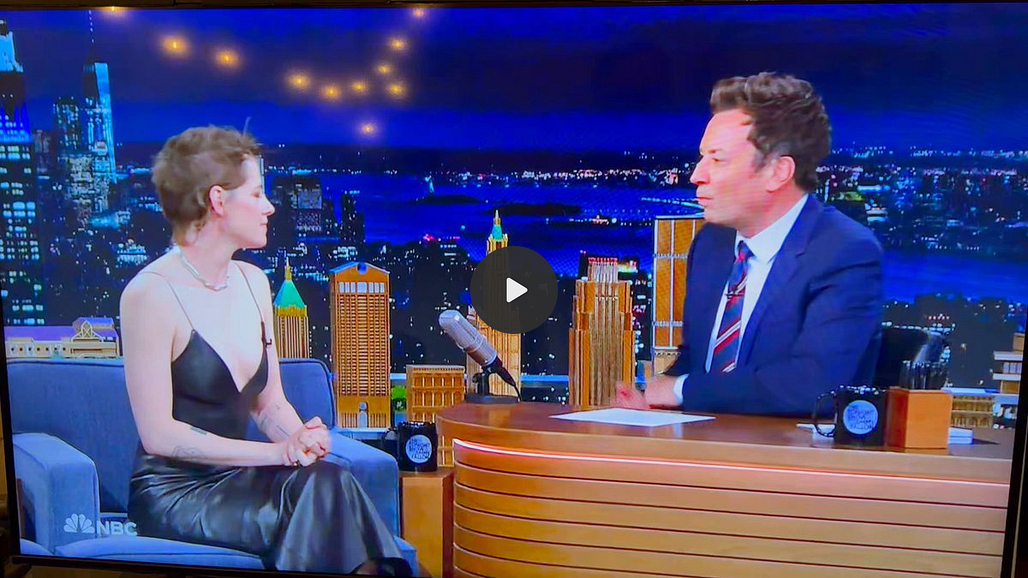
Of course, all the trolls and her fans had to chime in. Some hate, lots of blah blah blah, of course.
I have no proof that Stewart is on drugs. Don’t care if she is. I was just commenting. I have a wealth of knowledge about what people look like on hard drugs because I was an addict, and I was around other addicts. Kristen reminded me of what one looks like.
Perez Hilton had a mental breakdown or drug reaction on a live stream within the last few weeks. I commented on that as well. I have an opinion sometimes.

That said, here are a few statistics on celebrity drug deaths and addiction and the toll on Americans as well.
Hollywood, Addiction, and the Facts Behind the Headlines
Addiction, overdose, and mental health crises have affected some of the biggest names in Hollywood, music, and television for decades. That is not gossip—it is a documented reality. But it is also important to separate confirmed facts from internet speculation.
There is no credible national database that can tell us exactly how many Hollywood celebrities have struggled with drug addiction, entered a hospital, or died from an overdose. Medical records are private, many people seek treatment without announcing it, and “Hollywood celebrity” is not an official public-health category.
Still, the documented toll is significant.
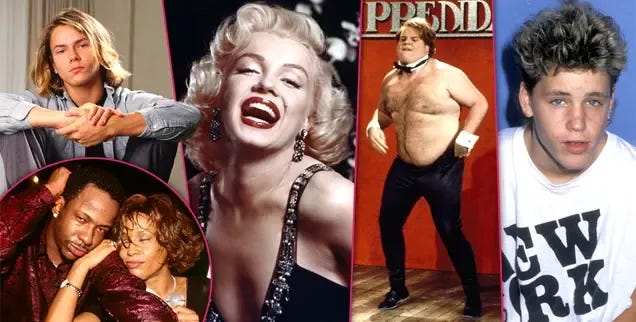
A peer-reviewed study published in 2016 examined publicly reported drug-related celebrity deaths from 1970 through 2015. Researchers identified 220 celebrities whose deaths involved drugs and for whom the substances involved could be clearly established. More than half of those people came from the entertainment industry, including actors and musical performers. The average age at death was just 38.6 years, and most deaths occurred between ages 25 and 40. The researchers found that prescription opioids became increasingly involved in celebrity deaths during the 21st century. Read the study here
That number should not be misrepresented. It is not a complete count of every actor, actress, singer, or television figure who has ever battled addiction. It covers celebrities broadly, not Hollywood alone, and it only includes deaths that were publicly documented well enough for the researchers to verify. The real number of people in entertainment who have faced substance-abuse problems or hospitalization is almost certainly higher—but no honest reporter can put a precise number on it.
Hollywood’s history includes well-known, documented cases involving alcohol, cocaine, heroin, prescription painkillers, sleeping medications and fentanyl. Some entertainers publicly discussed recovery or treatment. Others were hospitalized after overdoses. Others died after toxicology reports established drug involvement. These are not isolated incidents; they reflect the same wider crisis that has devastated families in every part of America.
The national figures make that clear. The CDC estimates that approximately 69,973 Americans died from drug overdoses in 2025, including about 44,564 deaths involving opioids. Those numbers were lower than the previous year, but they remain staggering. CDC data
Fame does not make someone immune to addiction. In some ways, it can make recovery harder. Performers face extreme pressure, public scrutiny, career instability, access to money, access to enablers and, in some cases, chronic pain or mental-health struggles. None of that excuses destructive behavior. But it does explain why the issue keeps surfacing among people who appear to have everything.
There is also a basic standard that should apply to everyone—famous or not: a person’s appearance in a short video is not proof that he or she is using a particular drug. Shaking, rapid movements, anxiety, fatigue, medication effects, illness or simply an uncomfortable interview can look alarming on camera. Confirmed reporting should rely on public statements, official records, credible eyewitness reporting or medical and legal documentation—not an internet diagnosis.
That standard does not mean we ignore the drug crisis. It means we report it accurately.
The honest takeaway is this: addiction has taken a real and documented toll on Hollywood and the entertainment world, just as it has on the rest of America. The country needs stronger treatment, tougher action against traffickers, better mental-health care and a culture willing to confront addiction without glamorizing it.
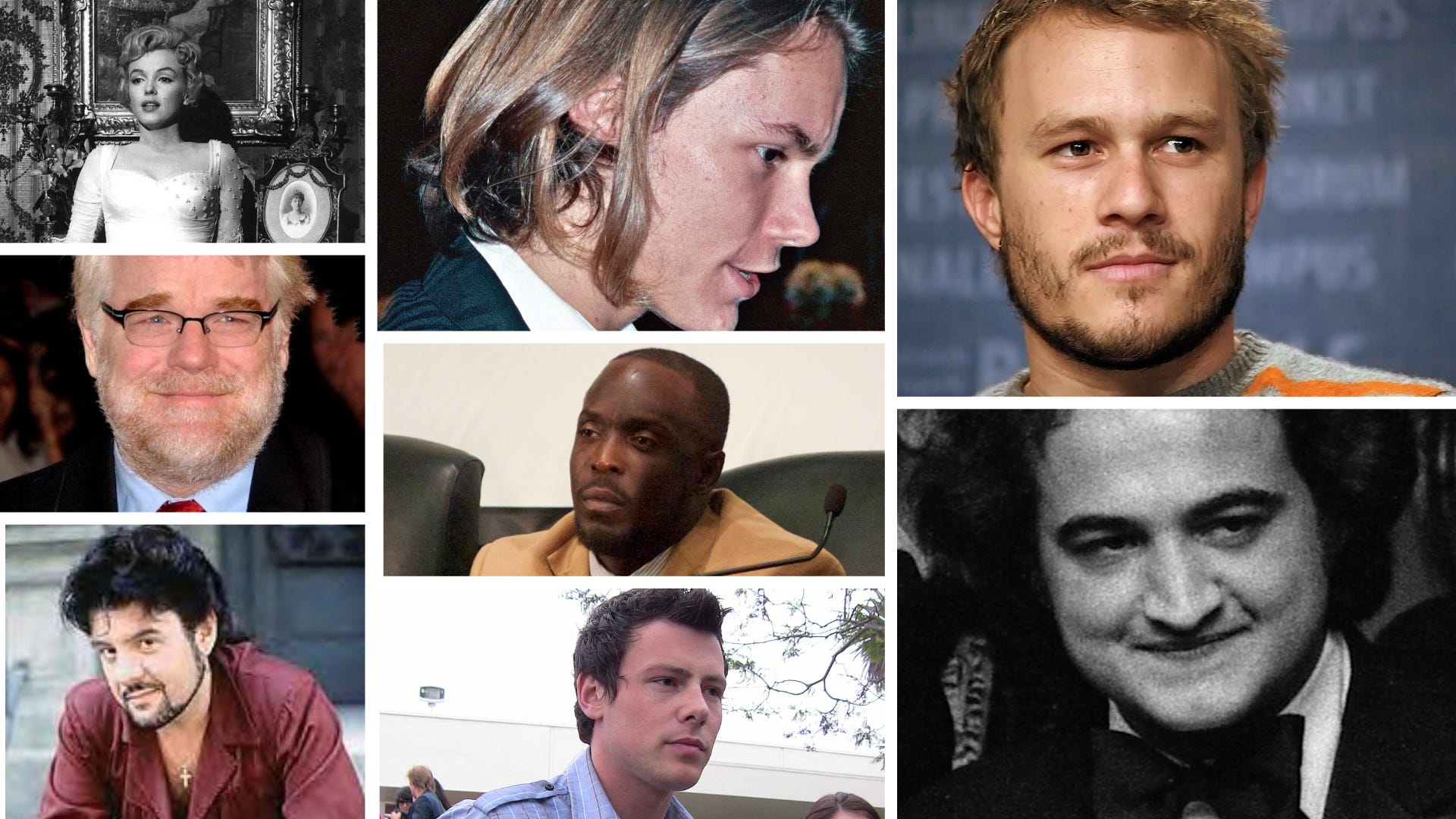
Selected Hollywood Actors Whose Deaths Were Officially Ruled Drug-Related
This is not a complete count of Hollywood actors affected by drugs. No official database tracks every entertainer’s addiction history, hospitalizations, or overdoses. These are selected, widely documented cases in which drugs were ruled to be the cause of death or a major contributing factor.
Marilyn Monroe (1962) — died from acute barbiturate poisoning; her death was ruled a probable suicide.
Judy Garland (1969) — died from an accidental barbiturate overdose.
John Belushi (1982) — died from combined heroin and cocaine intoxication.
River Phoenix (1993) — died from acute multiple-drug intoxication outside a Los Angeles nightclub.
Chris Farley (1997) — died from an accidental overdose involving cocaine and morphine.
Dana Plato (1999) — died from an overdose involving prescription drugs; the death was ruled suicide.
Robert Pastorelli (2004) — the Murphy Brown actor died from an accidental heroin overdose.
Brad Renfro (2008) — died from acute heroin and morphine intoxication.
Heath Ledger (2008) — died from the combined effects of several prescription medications, including painkillers, anti-anxiety drugs and sleeping medication. His death was ruled accidental.
Brittany Murphy (2009) — her death involved pneumonia, anemia and multiple-drug intoxication from legal medications.
Cory Monteith (2013) — died from mixed heroin and alcohol toxicity.
Philip Seymour Hoffman (2014) — died from acute mixed-drug intoxication involving heroin, cocaine, amphetamines and benzodiazepines.
Skye McCole Bartusiak (2014) — the young actress died from accidental mixed-drug intoxication.
Michael K. Williams (2021) — died from accidental intoxication involving fentanyl, heroin and cocaine.
Matthew Perry (2023) — the medical examiner found that the acute effects of ketamine, along with drowning and other factors, caused his accidental death.
(Brittany Murphy and Matthew Perry were “drug-related deaths,” not straightforward overdose cases—the official findings were more medically complex.)
The broader documented record is substantial. A peer-reviewed study examining public records from 1970 through 2015 identified 220 celebrity drug-related deaths with verifiable substances involved; more than half of those cases were actors or musical performers. The study’s authors stressed that the figure is not a complete count of every celebrity affected by drugs, because private medical history and many cases are never fully disclosed. Read the study
The human cost extends far beyond Hollywood. The CDC estimated nearly 70,000 U.S. drug-overdose deaths in 2025, including roughly 44,564 involving opioids. CDC data
I’m glad I commented about Kristen Stewart, because now we can shed some light on drug abuse, addiction, and the price Americans pay for it because politicians haven’t done enough to eradicate the scourge.