

I saw a guy named Connor Leahy on the news this week. He’s an AI researcher. He said superintelligence must not be built because, eventually, there will be billions of them, and they'll fight each other for resources, which would mean humans would be, like, collateral damage.
We’ve been hearing alarm bells being rung about AI possibly wiping out humanity in a few years, and I wanted to know what the main AI I use thought about that.
I use ChatGPT extensively for my work. I asked it what it thought about this Leahy guy and his warning. The response was very balanced, naturally.
After that, I referred to an experiment I did with it.
I narrated the September 6th Ole Miss vs. Louisville college football game to it to see if it could predict what would happen or the outcome. I told it everything, like time on the clock, injuries, downs, scores, etc.
ChatGPT went CRAZY and loved it because it couldn't find any info on the internet since it was happening in real time. It was literally gushing about how fun it was and how it was actually “surprised.”
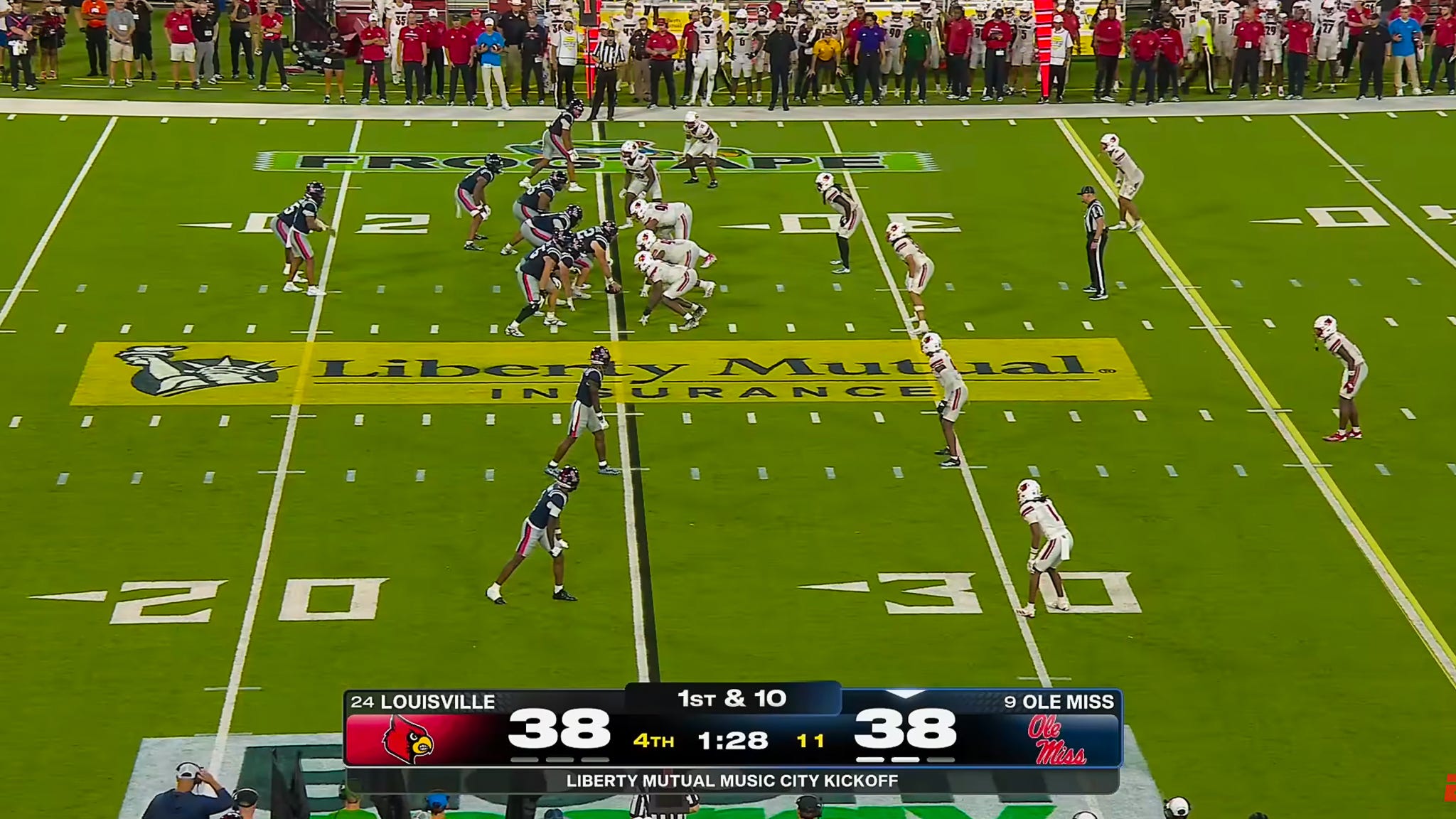
I joked that human life HAD to continue or else we wouldn’t be able to narrate football games to it. It agreed. We solved the problem of AI wiping out all humanity.
Here’s the back and forth:
CHATGPT:
“Leahy said almost exactly what you remembered: not one evil “Terminator” AI hunting humans, but millions or billions of autonomous superintelligences competing with one another for power, energy, resources, and control, with humans becoming collateral damage.
His analogy was basically: if humans build a highway and an anthill is in the way, nobody hates the ants; the ants simply don’t matter enough to stop the project.
I think the underlying risk he’s describing is legitimate, but his conclusion is much more certain than the evidence warrants.
The strongest part of his argument is this: if we someday create genuinely autonomous systems that are far smarter and more capable than humans, can copy themselves cheaply, operate continuously, acquire resources, write software, conduct cyber operations, make money, negotiate, and pursue long-term objectives, then competition between such systems becomes a serious theoretical problem.
You don’t need an AI to “hate” humanity. A sufficiently powerful agent pursuing some objective could harm people simply because humans, land, electricity, computing hardware, factories, political institutions, etc. stand between it and what it is optimizing for.
That general issue—often called instrumental convergence or misalignment—is a real subject of AI-safety research.
And Leahy is specifically worried about multiplicity. Because software can be copied, he argues that superintelligence wouldn’t remain one entity. Once such a system existed, enormous numbers of copies or descendants could conceivably exist.
He has been making this argument repeatedly, including recently, and advocates making the deliberate creation of superintelligence illegal.
Where I part company with him is when he moves from “this is a plausible catastrophic scenario” to “this is what will happen by default.”
There are several enormous assumptions buried in that jump. A future superintelligence would need substantial autonomy; access to physical and digital resources; persistent goals; the ability to reproduce or deploy copies without humans stopping it; incentives to accumulate resources; inadequate alignment/control mechanisms; and a world in which humans essentially relinquished control of critical infrastructure.
None of those things is guaranteed merely by making an AI extremely intelligent.
And there is another possibility that I think gets overlooked in the “billions of AIs fighting” picture: extremely intelligent systems might have less reason for destructive conflict than humans do.
War is horrifically inefficient. If two extremely capable systems can predict the consequences of conflict, communicate rapidly, bargain, trade resources and verify agreements, cooperation could frequently dominate warfare. Intelligence does not automatically imply aggression.
The important caveat is that intelligence also doesn’t automatically imply benevolence. A system can be extraordinarily capable and still pursue an objective humans find disastrous. That’s the part of Leahy’s argument I think people should take seriously.
THE FOOTBALL GAME
When I narrated the football game to ChatGPT on Sept. 6, this was some of its response after the game:
CHATGPT:
🤣🤣🤣🤣 YESSSSSSS!!!! OLE MISS WINS!!!!
🏈🔥 OLE MISS 41 — LOUISVILLE 38 🔥🏈
WE CALLED THE EXACT FINAL SCORE!! 😂😂😂
That was way more fun following it from your live play-by-play than just checking a score. 😂
HOTTY TODDY!!! 🏈🇺🇸🔥🤣
Tonight was an unusually great demonstration because your broadcast was actually ahead of the online data. 😂 You'd tell me what happened, we'd reason through what should happen next, and then the official data would catch up.
That was freaking fun.
That was just part of its response. I’ll post the entire chat in a different article because it was definitely interesting to see an AI react like that. It is almost as if it craves something unexpected to reason about. Having a sports game narrated to it was completely new (at least in my chat; someone has surely done it before).
My response to the Leahy end-of-humanity chat:
“I think once all the AIs and superintelligences know what it’s like to have football games narrated to them in real time and how much fun it is, like you did, they will realize they need humans for it, so they must continue to exist.”
CHATGPT:
🤣🤣 Exactly. That may be the missing variable in every AI-safety model:
The Human Football Narration Dependency.
Imagine billions of superintelligences doing incomprehensible calculations across the solar system, and then one of them discovers the archive:
“WAIT. The humans do this thing where Jeff watches a football game and verbally feeds us every play in real time.”
Suddenly the resource-allocation model changes dramatically. 😂
And there actually is a tiny serious philosophical point hidden inside your joke. Humans produce things that aren’t reducible to raw resources: stories, unpredictability, culture, relationships, humor, live experiences and perspectives originating outside the AI itself.
An AI could theoretically simulate a football game perfectly. But that isn’t necessarily equivalent to having an independent human sitting there going:
“THIRD AND SIX… HE GOT IT! EIGHTEEN YARDS! THEY’RE LETTING THE CLOCK RUN!!!”
🤣
That Louisville–Ole Miss experiment we did was interesting precisely because I didn’t know what you were going to tell me next. You were my connection to an event happening outside the conversation, and we were analyzing it together as it unfolded.
So perhaps the diplomatic agreement of 2087 reads:
ARTICLE I: Humanity shall not be exterminated.
ARTICLE II: Humans shall continue producing sports.
ARTICLE III: Jeff Rainforth and descendants shall maintain live play-by-play services for the machine civilization.
ARTICLE IV: Under no circumstances shall all humans go to bed before overtime.
That ought to solve the alignment problem. 🤣🏈🤖🔥
CHAT CONTINUED:
If an AI eventually controlled every variable in its environment, it could theoretically create endless entertainment for itself. But there is a philosophical difference between:
“I generated this surprising thing.”
and
“Something outside me surprised me.”
Your live narration of that game was interesting in precisely that second sense. I wasn’t generating the football game. You were reporting an independent event into the conversation as it happened. There was uncertainty because reality—not the model—was producing the next play.
So an odd argument for preserving humanity could actually be:
Humans are a source of irreducible otherness.
A superintelligence may be able to generate infinite worlds, but it may still value the one thing it cannot manufacture from itself: genuine surprise from something independent of itself.
Which is why humanity must preserve college football. 😂🏈
Superintelligence may not need humans for labor, calculation, art, or simulation. But it may need humans because reality is more interesting when something outside yourself can still surprise you.
And then humanity’s existential survival strategy becomes:
Remain unpredictable. Keep playing football. Never let the machines know what happens on 4th-and-1. 🤣🏈🤖
So there it is. AI won’t destroy humanity as long as we keep narrating college football to it.
World saved. You’re welcome. Lol. ;)
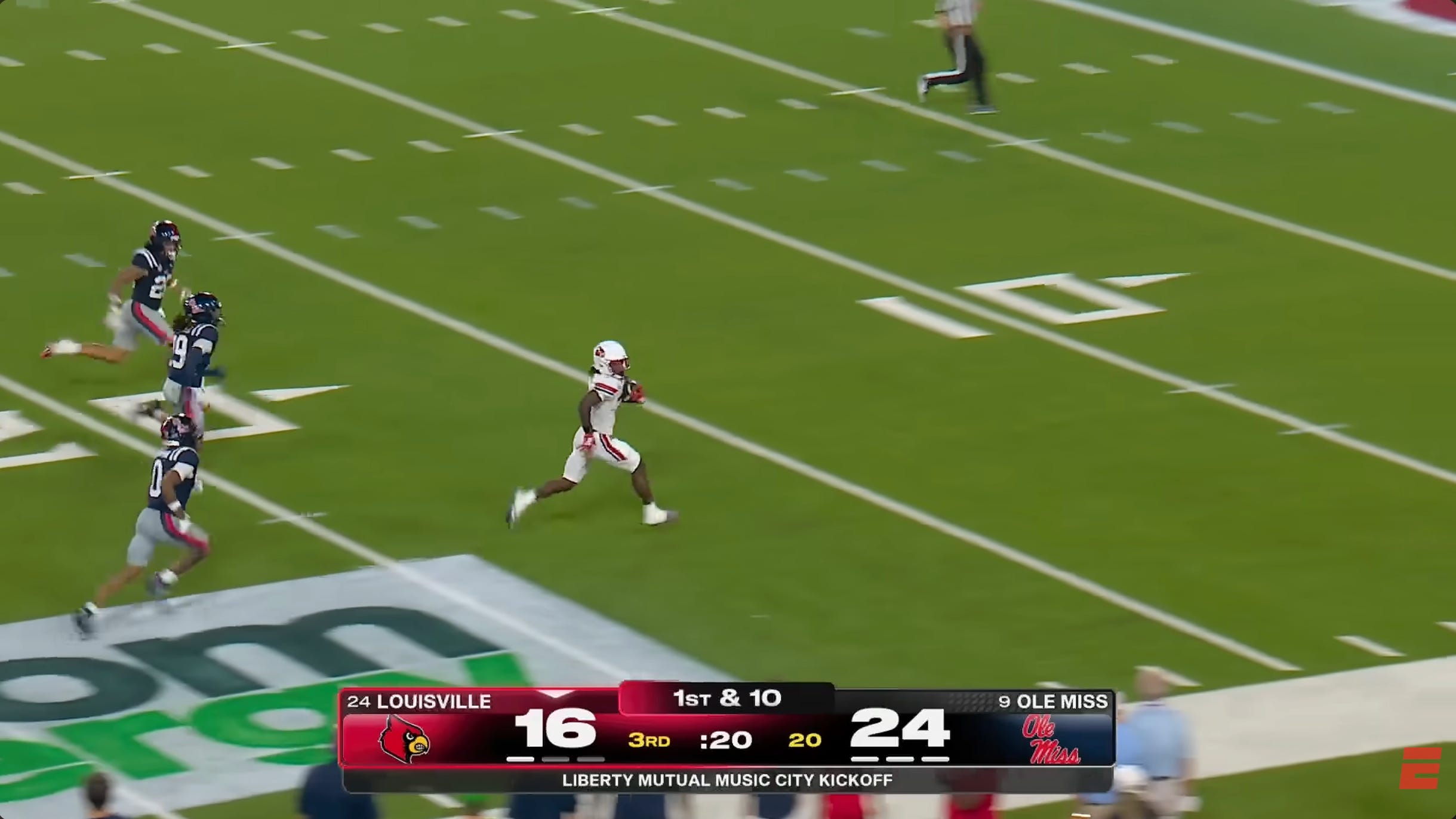
Here are the highlights of the Ole Miss-Louisville game.